Introduction
The IGCS Summer School 2021 on the topic of Sustainable Water Management at the Saltwater - Freshwater Interface was the third IGCS event that was hosted completely online due to the ongoing COVID-19 pandemic restrictions. It took place from 12th July 2021 - 23rd July 2021. The Summer School was funded by the German Academic Exchange Service (DAAD), and hosted by RWTH Aachen University (Germany), Kiel University (Germany), and IIT Madras (India). Coastal zones, the narrow transition areas that connect terrestrial and marine environments, are home to 60% of the major cities of the world and 40% of the world's population live within 100 km of a coastal zone.
Coastal zones are additionally the most useful and esteemed environments on our planet. The saltwater-freshwater interface is of special interest due to its uniqueness. It addresses an illustration of the connections among people and ecosystems and a priority area for sustainability idea's execution. They represent a unique example of the relationships between humans and ecosystems and a priority area for the sustainability concept's implementation. Our objective was to understand the functioning at the saltwater - freshwater Interface and to look at the different water management practices that are implemented at these interfaces including the sustainable aspects that revolve around it. Water is extremely vital for the development of any form of life. Water is under severe pressures, namely due to population growth, rapid urbanization, consumption, pollution, and climate change, among others. This is a major concern in highly developed countries, like Germany, but even more for highly populated developing countries like India.
In this state of a airs, the United Nations World Water Development Report 2020 considers that water security will be one of the most critical crises of the world during the next several decades. To raise the mindfulness and tackle this issue, the United Nations also included ensuring availability and sustainable management of water and sanitation as one of the 17 Sustainable Development Goals that are intended to be achieved by the year 2030. Worldwide at the public, territorial and neighbourhood level, a surprising number of partners are attempting to discover answers for supportable administration of water. Tending to supportable administration of water requires the use of an interdisciplinary and integrative methodology that incorporates all sorts of partners and scaffolds the disciplines.
Summary of the Activities
This Summer School endeavoured at clarifying the difficulties and possible answers for sustainable management of saltwater-freshwater interfaces just as spreading effective flow instances of the board in India and Germany. It brought together Indian and German students who jointly and interactively developed their skills with respect, for instance, to understand the systemic nature of activities that go on at the saltwater – freshwater interfaces, identifying the challenges and issues at these interfaces, strengthening public-private partnerships, and developing ideas for future possible solutions.
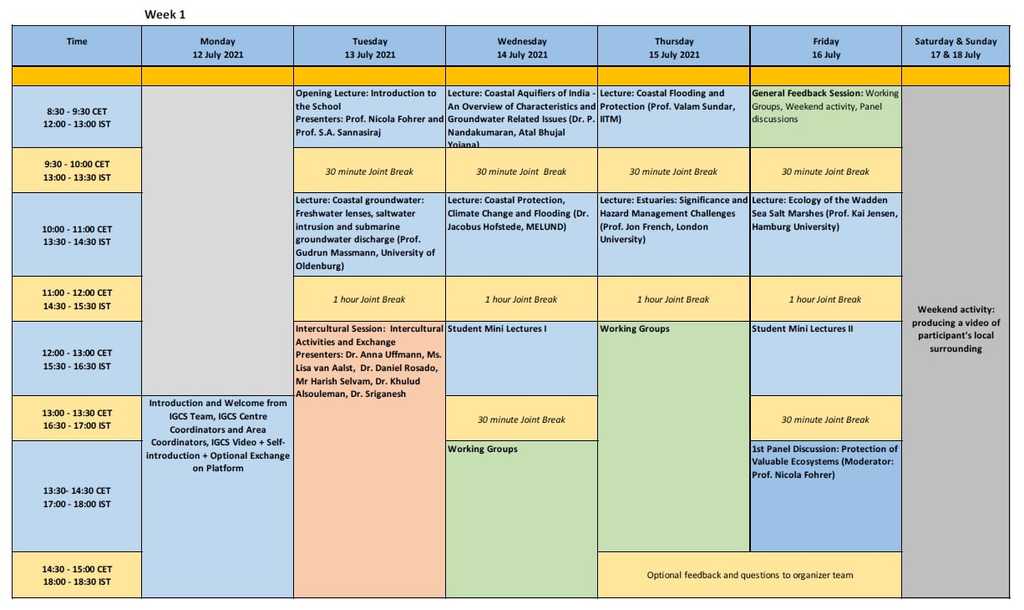
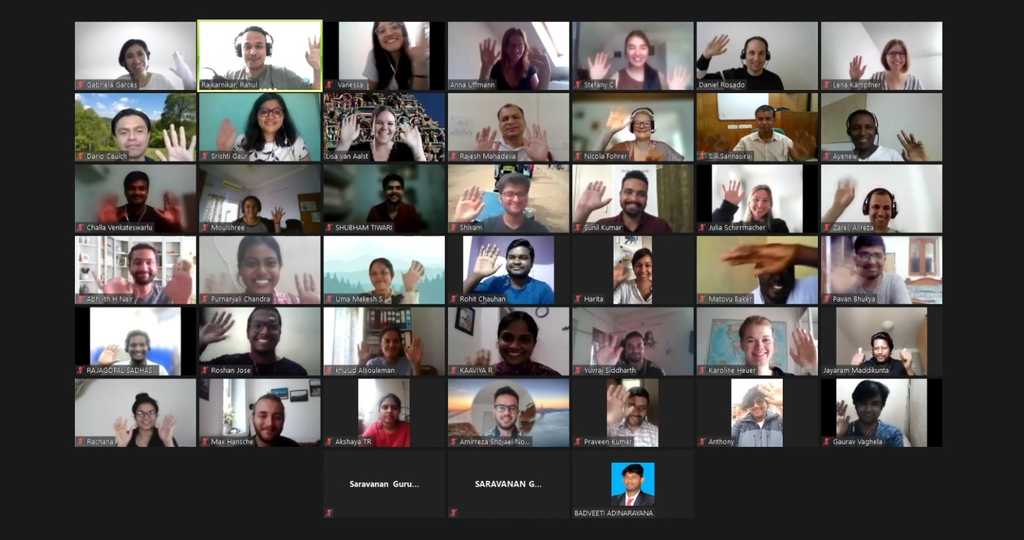
On the first day of the Summer School, we had an introductory session where the whole IGCS organizing team from both sides – German and Indian introduced themselves. The centre coordinators started with their brief introduction, and then the focus area coordinators took the stage to introduce themselves. The event coordinators from RWTH Aachen and Kiel University gave us a warm welcome as well. This whole session marked the beginning of the IGCS Summer School 2021. The IGCS video was played to the entire group. We took our conversations to a chat-based platform thereafter where we had the freedom to express more informally. I think this helps with helping everyone gel better with the whole group, and for everyone to feel at ease. We were also introduced to the platform called ‘WonderMe’ which was planned to be used as a platform to communicate with the speakers, organizing staff and other participants during the assigned breaks. On the second day, in the afternoon session, we had intercultural activities that were planned for us by the organizing team that included breakout rooms where students from both sides got to chat and bond a bit in smaller groups. We likewise enjoyed an intercultural quiz and survey (on the stage called 'menti') which assisted us with holding better in a more proper setting.
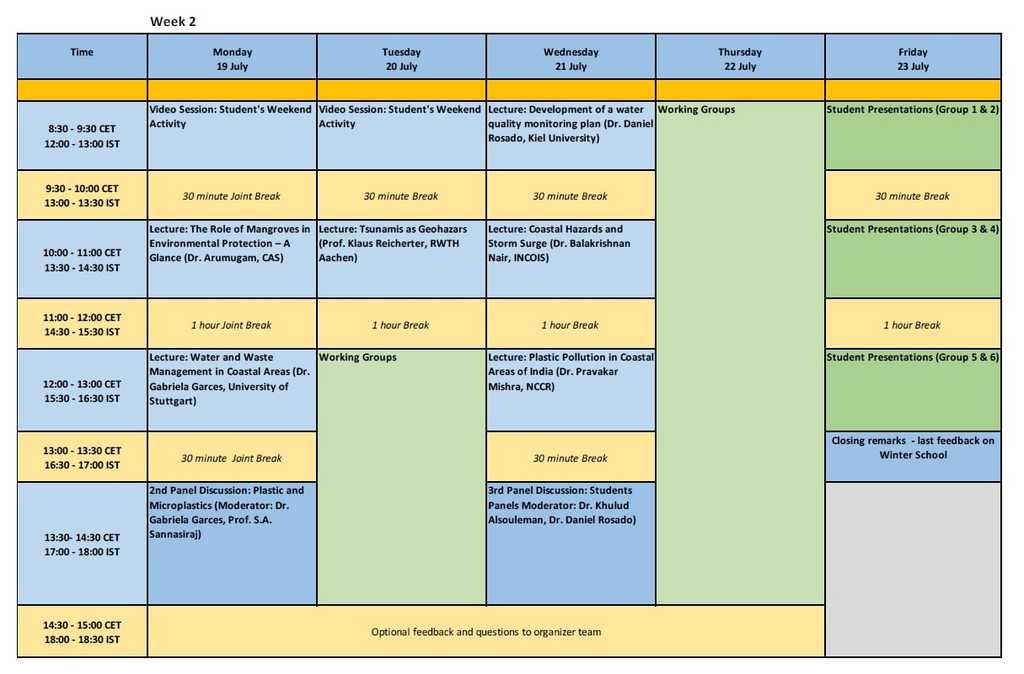
The Summer School lasted for 2 weeks and was majorly divided into 3 segments. The first segment included seminars and lectures from professionals from this domain. We had 12 different speakers who spoke about different aspects of the saltwater-freshwater interface throughout the school. They talked about the scientific aspects revolving around these interfaces, like the topography, the different pressures of nature that act on them, the different ecosystems that these zones house, the economic value that they have – both to nature and to humans, the anthropogenic activities that are carried out and their stressors, the already existing water management practices that are carried out, and possible future solutions to achieve sustainability at these interfaces. I found the lecture given by Prof. Dr. Jon French (Estuaries: Significance and Hazard Management Challenges), and Prof. Dr. Kai Jensen (Ecology of the Wadden Sea Salt Marshes) particularly helpful to me because they closely align with my research interests, and they gave insights from a government institutional point of view which is not easy to receive on a daily basis. The content of their slides was very detailed on the topics they were speaking about.
The second segment was made up of panel discussions. There were 3 of them during the Summer School that included different panellists with different backgrounds that brought a unique perspective to the panel discussions. I found the panel discussion on Protection of Valuable Ecosystems particularly insightful as it was a topic that I focus on in my master’s program and the discussions that followed were from varied perspectives which made the dialogue very interesting. Special mentions to the third-panel discussion moderated by Dr. Daniel Rosado and Dr. Khulud Alsouleman on the topics put forth by the participants of the school. It gave a chance to tend to everyone topics regarding the theme of the school. I, personally, suggested the topic of the communication issue from the authorities that took place during recent floods that occurred in the western part of Germany bringing great loss to life and property. We had some great insights as to how such information can be communicated more efficiently in the future when such disasters strike.
The third segment of the Summer School was the working group/group project. The outcome of which was to make a presentation of our findings at the end of the school. The participants were divided into 6 working groups, and each group was assigned with one or two supervisors who would guide the group during the 5 group sessions that were allotted. Each group had about 5-6 group members, and on the last day of the Summer School, each working group had to present their findings in the form of a presentation which should have lasted for roughly about 20-30 minutes. The audience had a chance to question the working group after their presentation as well. After all the presentations on the last day of the Summer School, we had the last feedback session, and the final remarks were given by the IGCS Summer School organizing team.
Research Questions & Group Activities
Coming into this Summer School, I had some idea about these interface zones and the different sustainable water management practices that are carried out both in India and Germany. I, nevertheless, came with an open mind to learn about this topic and gain some more specific insights in this domain. As part of my master’s degree in Environmental Management, I have studied in detail the concepts of sustainable development, and the United Nation’s 17 Sustainable Development Goals (SDGs) out of which 2 goals (SDG 6: Clean Water and Sanitation, and SDG 14: Life Below Water) that closely align with our theme were studied in detail during the course of this school. The idea of implementing these goals in the near future (by 2030) and the complications that come with it, and how different countries are tackling these complications is what intrigues me the most about them.
Before the start of the Summer School, I came across the different group topics that were offered and the one that caught my attention was the group that was headed by Dr. Daniel Rosado and Dr. Khulud Alsouleman on the Best management practices from river to sea. I felt that the best way to understand a human-nature interaction in these types of interaction zones was by carefully analysing the best practices that are followed in this domain.

The anthropogenic impacts on aquatic ecosystems have intensified notably in recent decades, mainly due to the increase in world population and industrialization. This situation has led to their deterioration, reaching worrying levels of pollution. The main objectives of our working group were clearly laid out by our group facilitators which are as follows:
- Understanding the impact on the aquatic environments at the Saltwater-Freshwater Interface and people's health of anthropogenic activities.
- Exploring management measures that have been applied to tackle these issues.
- Analysing and proposing management measures that would have a positive impact on the aquatic environments at the saltwater-freshwater Interface.
It was my pleasure to be admitted to Dr. Rosado’s and Dr. Alsouleman’s working group as it was exactly what I wanted in the first place when we were asked to give our group preferences. We were six members in this working group including myself, of which two of us were associated with German Universities, and the rest four were our Indian counterparts. We were a diverse bunch coming from different scientific backgrounds and at different stages in our respective scientific careers. We knew from the word get-go that it is going to be difficult, but none of us was shying away from the challenge that was in front of us. In the first group session, we introduced ourselves in a very thorough manner with Dr. Rosado leading the way. Both our facilitators opened up in a friendly manner and made everyone feel comfortable. They gave us the freedom of going down any route with our group work and backed our ideas. And by the end of the first week, we bonded quite well, understood our topic’s overview, and had a clear focus on what we would like to present based on our findings. At the beginning of the second week, we now had a narrowed focus on the topics that we wanted to cover with regards to the best practices that were adopted on both sides – Indian and German. We selected two riverine systems (Elbe River for Germany, and Godavari River for India) as examples from either side to better compare the anthropogenic activities and their impacts, already existing management strategies in these systems, and the different future measures that can be carried out to achieve a sustainable water management plan.
The day before the presentation, we had the whole day to prepare the presentation slides. We all worked on the respective parts that we had already divided, and then, in the end, I compiled it all in a very presentable and structured format for our group. At the end of the day, we had a couple of mock presentations that was supervised by Dr. Rosado and Dr. Alsouleman, and they gave us some constructive criticism on our content and presentation skills, which we tried to work on and implement to the best of our group’s abilities. We decided that everyone would have about 3 minutes to present (roughly 3 slides per person), so that it would take the whole group presentation about 18-20 minutes to be done with, leaving some time for answering some questions from the audience. On the day of the presentation, we were the fourth group to present our findings. We were aware that being one of the last groups to present, we had to make sure that we didn’t lose our audience’s attention. We packed our slides with easy-to-understand images, and limited text jargon to explain our findings. All in all, our group gave a solid presentation covering the topic we had in hand with a lot of applicative examples on display. I was thoroughly impressed with my group’s performance, and this was also expressed by our group’s facilitators. On behalf of our working group members, I would like to take this opportunity to thank both, Dr. Rosado and Dr. Alsouleman for giving us their time to guide us throughout the entire span of the working group time that was allotted. They brought their personal research findings, learnings, and valuable experience to the working group which helped us understand the topic in a more thorough manner.
Preferred Activities
I did enjoy a lot of activities throughout this summer school, but the one activity that I have never come across in any other schools (besides the last IGCS Winter School) that I have been a part of, and I would see more of it in other future schools as well that was the weekend activity session of making videos. In this Summer School, we were asked to make videos of our surrounding areas, especially of water bodies and the activities that take place in them. As a secondary part, we were also asked to capture the cultural aspects observed in our surroundings which when showed to the whole group brought out the intercultural aspect of this IGCS School. If you haven’t gathered from it yet, videography is an avocation of mine that I have developed over the years. Although I am not a professional in this domain, I still love doing it and seize the opportunity to produce a video whenever I can. While editing this video, I kept constantly watching the clips for the edit which made me closely observe the different aspects that were discussed during the week in the seminar lectures, and helped me visualize things a bit better, and in detail at the same time as well. At that moment, I was doing something that I was passionate about to understand better the concepts that I had recently been made aware of. It was an amazing way of learning, and that is why I can term this as my preferred activity of this IGCS School.
Networking
One of the things I have learned over the years is that Networking is one of the keys aspects of life, and too much of it can never do any harm. Throughout this Summer School, I had the opportunity of listening and interacting with a lot of knowledgeable and resourceful dignitaries who work in fields that I have personal interests in.
As I have mentioned earlier, I enjoyed the lecture given by Prof. Dr. Kai Jensen from the University of Hamburg, who works in the domain of applied ecology, and his working group’s research is focused on the Ecology of the Wadden Sea. He was kind enough to share his contact details after his presentation, and I am keen to get in touch with him.
From the Indian counterpart, I enjoyed being in the company of my working group and a review paper on our topic of our Summer School is currently in the works. And fingers crossed we will be able to complete, and publish it soon enough considering everyone’s busy schedule, but I am very optimistic about it. I am also trying to help build a new collaboration between IIT Roorkee and CAU Kiel with my fellow group mate, Mr. Praveen Kumar Vidyarthi’s co-operation on the topic of riverine and coastal system modelling. Although it is too early to comment on anything about it, I am very hopeful that something fruitful will come out of it. If our plans do execute, the IGCS team will be one of the first ones to be informed about it, and at this moment I am very thankful to the IGCS for these exciting avenues that have opened up at the very least.
Last, but not least, I resonated a lot with Dr. Daniel Rosado’s research interests, and I will surely grab an opportunity to work with him if it comes my way in the future. I think I made a very good choice at the beginning of the Summer School in selecting his working group.
Recommendations To Future Participants
I was very enthralled to get the opportunity to participate again in an IGCS School. I had an amazing time in the Winter School earlier this year, and that is what made me come back for the second time. I am not only going to give positive recommendations to fellow students who plan to attend future IGCS schools but also going to convince a lot of them to take it up as a good experience in the first place. It is not every day that a chance like this comes in hand to be part of a school with such an intercultural and interdisciplinary approach deeply rooted to the core. A student attending a school like this especially during these times is surely going to have a whole lot of learning coupled with fun and interactive sessions that would for sure make the time invested worth it.
Final Thoughts
The format of this digital school was well planned and executed as well. The duration of the school was perfect in my opinion to achieve the right depth in the topic of the school – not too deep to be a narrowed down module, and not too shallow to be a one-off seminar talk. There could be a scope of increasing more interactive sessions like a moot court format model that would increase more audience participation. I had a great time with all the participants and the organizing team, especially with my working group.
I think it is always a challenge to arrange a digital event these days, and several things can go wrong which no one has control over despite the amazing planning that has gone into it in the background. Nevertheless, I think the event was flawless in my opinion with regards to the technical aspects and considering the technical limitations/shortcomings that we face in these times.
Despite the physical restrictions, the Summer School was a success and it allowed participants to gain an international experience without stepping a foot out in the real world. In addition to its multicultural working environment, the Summer School presented a different challenge of understanding the novelty of online learning in interdisciplinary collaboration. Overall, the school presented an interesting model of how digital communication platforms can be implemented to interact and reach people beyond what was possible through conventional means. A lot of learning has been done on both sides throughout this school. It leaves a lot of dwelling upon for the participants as well as the organizers to take away from this school. I had a great time being part of this IGCS event, and I will take part in the next one as well which hopefully is in person. I would like to take advantage of the opportunities that the IGCS has laid out for us. A big thank you to the entire IGCS Summer School 2021 organizing team and everyone from IIT Madras, RWTH Aachen University, and Kiel University who was part of it in making this event a huge success. A special thanks to the funding institute German Academic Exchange Service (DAAD) through its program ‘A new Passage to India’, without whose help this event would not have been made possible.